EU Children's Product Safety: What Shoppers Must Check
Verify CE marking and EU toy safety standards when shopping online. Learn to spot non-compliant children's products and protect your family from safety risks.
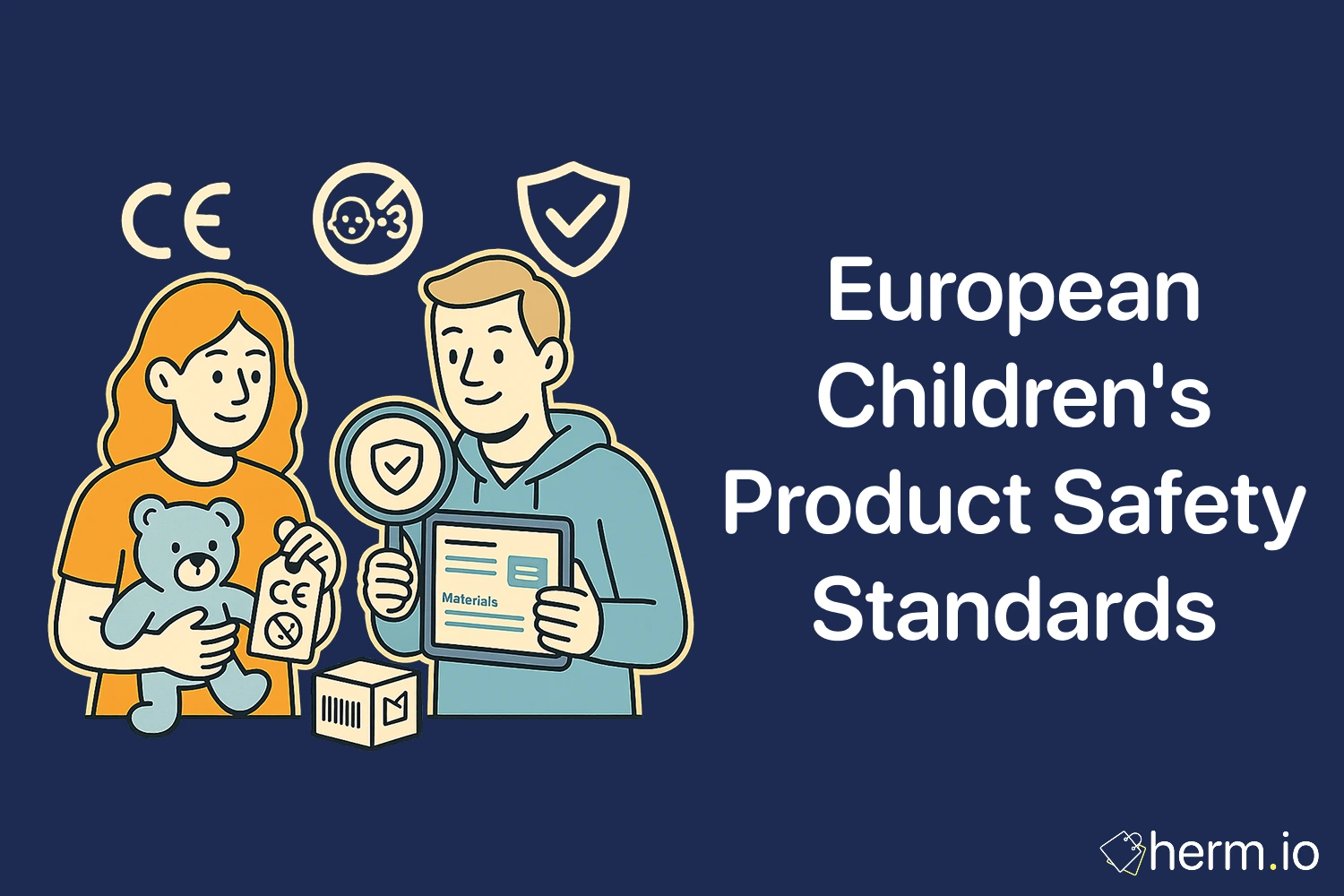
TL;DR: What You’ll Learn
- CE marking verification protects children from unsafe products sold through online marketplaces
- European Toy Safety Directive sets mandatory standards, yet non-compliant products regularly appear on major e-commerce sites
- Systematic verification takes roughly 3 minutes per product but prevents potential safety incidents
- Reporting non-compliant products to Trading Standards helps protect other families
Counterfeit CE marks appear on approximately 15% of children’s products sold through third-party online sellers. That statistic represents thousands of potentially unsafe items reaching UK homes each month, bypassing the robust safety framework the European Union established specifically to protect children.
The challenge intensifies when shopping online; you cannot physically inspect products before purchase, and marketplace platforms often host international sellers operating outside direct regulatory oversight. This creates vulnerability points that require systematic verification approaches.
Understanding CE Marking Requirements
The CE mark represents a manufacturer’s declaration that a children’s product meets all applicable European safety directives. This isn’t merely a quality badge; it’s a legal requirement for products sold in the UK and EU markets.
However, the mark’s widespread counterfeiting undermines its protective function. Distinguishing genuine CE marks from fraudulent ones requires understanding specific characteristics. A legitimate CE mark maintains precise proportions: the “C” and “E” must be the same height, and if you draw a circle around the “C”, the “E” should fit within a similar circle. The spacing between letters equals the width of the “C” stroke.
Many counterfeit marks place the letters too close together, resulting in what appears as “China Export” rather than “Conformité Européenne.” While the “China Export” mark controversy contains some mythological elements, the spacing error itself signals verification problems.
Beyond visual inspection, genuine CE marking requires accompanying documentation. Manufacturers must provide a Declaration of Conformity and contact details for the economic operator responsible for the product in the European market. Products lacking this information warrant immediate scrutiny.
Quick Wins: Implement These Today
- Check CE mark proportions against official templates available on gov.uk
- Verify manufacturer contact details appear on both product and packaging
- Request Declaration of Conformity before finalising purchases over £50
- Screenshot product listings showing safety claims for future reference
- Report suspect products to your local Trading Standards office
European Toy Safety Directive Essentials
The Toy Safety Directive (2009/48/EC) establishes comprehensive requirements covering mechanical properties, flammability, chemical composition, and electrical safety. Understanding these categories helps identify products that clearly violate standards.
Mechanical safety requirements prevent choking hazards through specific small parts testing. Toys intended for children under 36 months cannot contain components that fit entirely within a specially designed cylinder (31.7mm diameter, 57.1mm depth). This testing cylinder replicates a child’s throat dimensions.
Chemical restrictions limit heavy metals, particularly in painted surfaces or materials children might mouth. Lead content must not exceed 90 ppm in dry, brittle paint; cadmium restrictions apply across all toy materials. Recent directive updates restricted certain phthalates in plasticised materials that children could place in their mouths.
Flammability standards prevent rapid flame spread. Materials must self-extinguish when ignition sources are removed, and certain products (like disguise costumes) require specific warning labels about fire hazards.
Electrical toys must incorporate protection against electric shock, with particular attention to battery compartments requiring tools for access. This prevents young children from accessing batteries that pose ingestion risks.
Red Flags for Non-Compliant Products
Systematic analysis reveals consistent patterns in non-compliant product listings. Learning to recognise these indicators streamlines your verification process.
Warning Sign: Absent or Incomplete Safety Information
Legitimate manufacturers provide comprehensive age grading, specific hazard warnings, and material composition details. Vague descriptions like “suitable for children” without age specifications suggest inadequate safety assessment.
Warning Sign: Suspiciously Low Pricing
When identical products appear at dramatically different price points across sellers, the lowest-priced option frequently involves compliance shortcuts. Manufacturing to European safety standards involves testing costs, quality materials, and proper documentation—all factors reflected in pricing.
A detailed teddy bear meeting flammability standards, using tested dyes, and including proper labelling reasonably costs more than a superficially similar bear manufactured without these considerations.
Warning Sign: Generic Product Photography
Sellers using manufacturer’s stock photography sometimes don’t physically possess inventory or understand the products they’re selling. This disconnect from the supply chain often correlates with compliance uncertainties.
Request actual photos showing CE marking, labels, and packaging. Legitimate sellers readily provide these; evasive responses indicate problems.
Warning Sign: Missing Importer Information
Products entering UK/EU markets require a designated importer who assumes legal responsibility for compliance. The importer’s name and address must appear on the product or packaging. Its absence represents a serious compliance failure.
Warning Sign: Language Errors in Safety Information
Poorly translated warnings or instructions suggest products manufactured for non-European markets without proper adaptation. Safety warnings must appear in English for UK sales, using terminology parents can readily understand during supervision.
Verifying Product Compliance Before Purchase
Implementing a structured verification protocol before purchasing children’s products online significantly reduces risk exposure.
Step 1: Examine the Listing Details
Start with the product description and images. Look for:
- Specific age grading with reasons (“Not suitable for children under 3 years—contains small parts”)
- Complete manufacturer name and contact details
- CE marking clearly visible in product images
- Material composition information
- Compliance with relevant standards (EN71 series for toys)
Missing elements don’t automatically indicate non-compliance, but they require further investigation before purchase.
Step 2: Research the Manufacturer
Search the manufacturer’s name alongside terms like “recall,” “safety,” or “Trading Standards.” UK government recall databases (product-safety-database.service.gov.uk) list products withdrawn for safety concerns.
Check if the manufacturer maintains a website with contact details. Legitimate manufacturers typically provide customer service channels and safety information.
Step 3: Verify the Seller’s Track Record
Marketplace seller ratings reveal patterns. Focus on recent reviews (last 3 months) rather than cumulative scores. Recent complaints about product quality, missing safety information, or items differing from descriptions warrant caution.
Newer sellers with limited history but selling children’s products at competitive prices combine multiple risk factors.
Step 4: Request Documentation
Before completing purchases, particularly for products over £30, request:
- Declaration of Conformity
- Test reports (EN71 series for toys)
- Importer contact details
- Batch numbers for traceability
Professional sellers respond promptly with this information. Delays, excuses, or refusals to provide documentation indicate compliance uncertainties.
Step 5: Examine Products Upon Arrival
Even after careful pre-purchase verification, inspect products before allowing children access:
- Check CE marking quality and proportions
- Verify labels match listing descriptions
- Assess build quality for obvious hazards (sharp edges, loose components)
- Confirm age grading appears on product and packaging
- Test battery compartment security if applicable
This final verification catches problems that weren’t apparent online.
What to Do with Non-Compliant Products
Discovering non-compliant products after purchase requires systematic response to protect your family and prevent other children’s exposure.
Immediate Actions
Remove the product from children’s access immediately. Even if your child hasn’t experienced problems, unsafe products pose latent risks.
Document everything: photograph the product, packaging, and any markings or labels. Screenshot the original listing before sellers can modify it. Save email communications and payment records.
Reporting Channels
Contact your local Trading Standards office through the Citizens Advice consumer helpline (0808 223 1133). Trading Standards investigates non-compliant products and can initiate enforcement action against sellers.
Report the product through the UK government’s online reporting system. This feeds into national safety monitoring and can trigger wider investigations.
For products purchased through major marketplaces, use their internal reporting systems. While platform responses vary, reports create documentation patterns that can trigger broader seller reviews.
Securing Refunds
UK consumer protection law supports refund claims for products that don’t meet safety standards. Non-compliant children’s products are “not as described” regardless of other characteristics.
Contact the seller requesting a full refund, clearly stating the compliance failures you’ve identified. Reference specific standards (like the Toy Safety Directive) and mention your Trading Standards report.
If sellers refuse, dispute the charge through your payment provider. Credit cards offer Section 75 protection for purchases over £100; for smaller amounts, chargeback procedures apply. Payment processors take safety violations seriously.
Contributing to Systemic Improvement
Your individual reports contribute to pattern identification. Trading Standards authorities compile complaint data to identify problematic sellers, manufacturers, or product categories requiring targeted intervention.
Sharing your experience (while protecting personal information) on consumer forums and social media helps other parents. Specific details about how you identified non-compliance educates other shoppers on verification techniques.
Building Long-Term Safety Habits
Product safety verification becomes more efficient with practice. After checking several products systematically, you’ll quickly spot concerning patterns and recognise compliance indicators.
Consider maintaining a simple spreadsheet tracking children’s product purchases: manufacturer, seller, compliance verification steps completed, and any concerns noted. This personal database proves valuable if questions arise later and helps you identify sellers consistently meeting standards.
Subscribe to product recall notifications from the Office for Product Safety and Standards. Email alerts inform you immediately if products in your home face safety concerns.
Join parent communities focused on product safety. Groups like Which? and Mumsnet maintain active discussions about unsafe products, helping you stay informed about emerging concerns before widespread publicity.
The systematic approach to verification might add a few minutes to your shopping process, but protecting children from unsafe products justifies this investment. Your vigilance creates a safer environment not only for your family but for the broader community of children who benefit when non-compliant products are identified and removed from circulation.
FAQ
How can I tell if a CE mark is genuine just by looking at it?
Genuine CE marks maintain specific proportions: the letters are the same height, and if you draw a circle around the “C”, the “E” should fit within a similar circle. The spacing between the letters should equal the width of the “C” stroke. Additionally, genuine CE marking must be accompanied by the manufacturer’s name and address on the product or packaging, along with a Declaration of Conformity upon request.
Are all products sold by established marketplace sellers automatically safe for children?
No, marketplace platforms host millions of third-party sellers with varying compliance standards. Even on major platforms like Amazon or eBay, individual sellers may list non-compliant products. The platform itself doesn’t verify compliance for every listing. You must verify safety standards regardless of the marketplace’s reputation.
What should I do if my child has already been using a product I’ve discovered is non-compliant?
Remove the product from your child’s access immediately and assess whether any injuries or reactions have occurred. If you notice any health concerns, consult your GP and mention the non-compliant product. Report the product to Trading Standards and the seller, documenting everything with photographs. Most importantly, don’t assume that because your child hasn’t had problems yet, the product is safe—many safety hazards present risks that manifest unexpectedly.
Do products with CE marking definitely meet all safety standards?
Genuine CE marking indicates the manufacturer declares compliance, but it operates on a self-certification basis for most products. The mark doesn’t guarantee independent testing occurred, which is why additional verification steps remain important. Look for test reports (EN71 series for toys), check manufacturer credentials, and verify the importer’s contact information is present. Products displaying CE marks can still be non-compliant if the manufacturer made false declarations.

Written by
Oliver James Whitmore
Contributor
I'm a security expert specializing in privacy, systems architecture, and cybersecurity. With experience across startups and large enterprises, I build resilient, user-centric security systems.
More from OliverRelated Articles
One4all Gift Card Online: Spend It Safely
Use a One4all gift card online safely: find UK retailers, check your balance, avoid declined payments and protect card details.
Cashback Subscription Trap: Spot Checkout Red Flags
Spot a cashback subscription trap after checkout, recognise Complete Savings charges, and stop hidden online shopping fees fast.
Complete Savings Legit? Cancel the Charge Safely
Complete Savings legit? Learn what the £18 charge means, how to cancel safely, and how to ask for a refund without paying a third party.