How to Spot Fake Brands Online Shopping Scams Before You Buy
Learn to spot fake brands online shopping scams with systematic verification. Protect yourself from counterfeit goods and fraud with our security-focused guide.
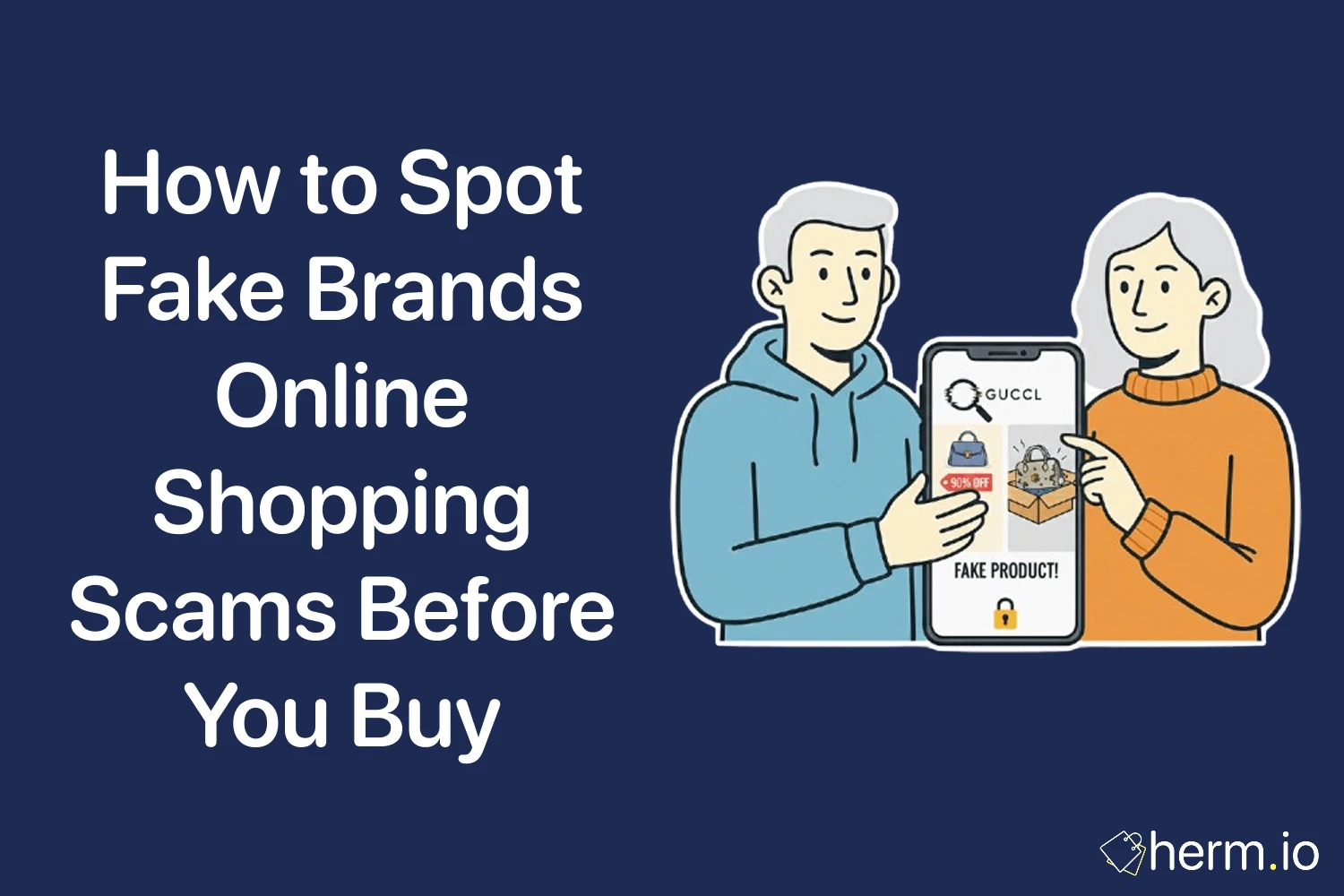
Fake brands online shopping has become one of the most sophisticated threats facing UK consumers today. Scammers have moved beyond obvious fraud; they now create convincing replicas of legitimate retail sites, complete with professional designs, security badges, and customer reviews.
The mathematics are sobering: a single minute of verification can prevent hundreds of pounds in losses. Yet most shoppers skip this crucial step, treating online purchases with the same casual trust they’d extend to established high street retailers. This article provides a systematic approach to distinguishing genuine branded goods from counterfeit operations.
Quick Tips: Implement These Today
- Run the 60-second check: Verify URL spelling, compare prices across retailers, scan delivery policies, confirm contact details, and search “[shop name] scam” before checkout
- Use payment methods with buyer protection: Credit cards and recognised payment platforms offer significantly better recourse than bank transfers or cryptocurrency
- Verify authorised seller status: Check the brand’s official website for their approved retailer list before purchasing branded items
- Trust structural inconsistencies: Vague policies, missing contact information, and pressure tactics are reliable indicators of fraudulent operations
- Act within hours if suspicious: Contact your payment provider immediately; speed dramatically improves fund recovery chances
Understanding the Fake Brands Online Shopping Landscape
The term “fake brands online shopping” encompasses several distinct threat categories. Each requires a slightly different protective response.
Non-Delivery Scams
These operations collect your payment and provide an order confirmation, then systematically avoid communication until you abandon the claim. The site may remain operational for months, collecting from multiple victims before disappearing entirely.
Counterfeit Brand Sales
The product arrives, but it’s not genuine. In categories like cosmetics, electronics, or perfume, counterfeit items can present genuine safety risks beyond the financial loss. The packaging often appears convincing at first glance.
Subscription Traps
You believe you’re paying a small shipping fee or trial amount, but you’ve actually authorised recurring charges that continue until you actively cancel. These operations rely on confusion during checkout.
Many fraudulent sites employ multiple tactics simultaneously. A systematic verification process protects against all variants.
The Systematic Red Flag Assessment
Fraudulent operations follow predictable patterns. When you understand these structural weaknesses, verification becomes straightforward.
URL Manipulation Tactics
Scammers create domain names that approximate legitimate brands. They add letters, swap characters, or include words like “outlet,” “official,” or “sale.” The human eye often glosses over these variations during hurried shopping.
Protection protocol: Type brand URLs directly rather than clicking advertisements. Compare the domain character-by-character against the official site. Be immediately suspicious of unusual subdomains or lengthy parameter strings.
Pricing That Defies Market Logic
Genuine retailers operate within predictable pricing bands, even during sales. When a site offers branded goods at 70-90% below market rates across their entire catalogue, you’re observing a structural impossibility, not a legitimate discount.
Protection protocol: Cross-reference prices with the brand’s official site and two major retailers. Treat dramatic outliers as high-probability fraud indicators.
Artificial Urgency Mechanisms
Legitimate retailers use time-limited offers, but fraudulent sites overemploy urgency: countdown timers on every product, “only 2 left” warnings that never change, and claims that dozens of people are viewing the same item simultaneously.
Protection protocol: When you feel rushed, pause deliberately. Legitimate stock shortages don’t require aggressive psychological pressure. Return to the site in an hour; if the “urgent” messaging persists unchanged, you’re likely observing a scripted pressure tactic.
Payment Method Restrictions
This represents one of the most reliable fraud indicators. Scammers prefer payment methods that offer minimal buyer protection and difficult reversal processes.
Be immediately cautious when sites push bank transfers, cryptocurrency, gift cards, or payment links that bypass the normal checkout flow. These payment structures exist specifically to evade standard consumer protections.
Protection protocol: Use credit cards or recognised payment platforms for unknown retailers. These provide significantly better recourse mechanisms. If a site refuses standard payment methods, abandon the purchase entirely.
Policy Page Inconsistencies
Fraudulent sites often copy policy templates from legitimate retailers, creating detectable inconsistencies. You’ll observe awkward phrasing that doesn’t match British English conventions, contradictions between different policy pages, and missing crucial details like return addresses or delivery timelines.
Protection protocol: Read the returns policy completely. Legitimate retailers provide clear return windows, specific return addresses, and realistic refund timelines. “No refunds on any items” is a critical warning sign.
Contact Information Gaps
Genuine businesses provide multiple contact methods because customer service supports revenue. Fraudulent operations hide behind contact forms, providing no direct email addresses or phone numbers.
Protection protocol: Look for a working phone number and direct email address. If the site only offers a form, search the listed physical address online. If it leads to a residential property or completely different business, you’re observing deliberate deception.
Manufactured Social Proof
Fake brands online shopping sites display convincing five-star reviews on their own pages. This is trivially easy to fabricate. Genuine verification requires independent sources.
Protection protocol: Search “[shop name] reviews,” “[shop name] scam,” “[shop name] delivery,” and “[shop name] refund” independently. Be sceptical of any operation that only displays reviews on their own platform.
Deceptive Trust Signals
Security badges, “verified” logos, and payment processor symbols can be copied and pasted by anyone. The presence of these images proves nothing about the site’s legitimacy.
Protection protocol: Treat all on-page badges as marketing claims requiring external verification. Focus on structural indicators like business registration, independent reviews, and authorised seller status.
The Step-by-Step Verification Process
This systematic approach works for most online purchases. Follow these steps in sequence.
Step 1: URL Verification
Begin with the domain itself. Check spelling character by character. Verify the top-level domain (.co.uk, .com) matches expectations. Observe how the site behaves during browsing; legitimate sites don’t aggressively prevent navigation away from product pages.
Step 2: Authorised Seller Confirmation
For branded products, visit the manufacturer’s official website. Look for “Where to Buy” or “Authorised Retailers” sections. Many brands maintain public lists of approved sellers.
If the retailer doesn’t appear on this list, you’re accepting elevated risk. This doesn’t prove fraud, but it removes a significant verification layer.
Step 3: Business Footprint Assessment
Legitimate retailers exist outside their own websites. Look for a registered company name (not just a brand-style site name), genuine social media presence with historical activity, and independent mentions on consumer sites or forums.
A business that exists only through its own website and recent advertising represents a structural risk.
Step 4: Independent Reputation Search
Execute specific searches: “[shop name] reviews,” “[shop name] scam,” “[shop name] refund problems,” and “[shop name] delivery issues.”
Multiple reports of non-delivery or counterfeit products represent reliable warning signals. Don’t dismiss patterns of negative feedback.
Step 5: Supplementary Site Verification
Domain age checkers and scam detection tools provide useful supplementary data, but cannot guarantee safety. Use them as supporting evidence, not definitive answers.
New domains aren’t automatically fraudulent, but they warrant additional scrutiny for branded goods.
Step 6: Checkout Flow Analysis
Before entering payment information, assess the checkout logic. Does it request unnecessary personal data? Does it force you towards risky payment methods? Does the flow match standard e-commerce patterns?
Unusual checkout behaviour often indicates structural problems with the operation.
Seasonal Vulnerability: January and Major Sales Periods
Fake brands online shopping scams intensify during predictable periods. January presents elevated risk due to returns, gift card usage, and “new year” discount expectations. Scammers create temporary sites specifically for these windows.
During high-risk periods, apply stricter verification standards. Be particularly cautious with unfamiliar retailers appearing through social media advertisements. Avoid retailers that exist only through paid advertising with no organic search presence.
Keep comprehensive documentation: screenshot product pages, save all confirmation emails, and document any communication. This evidence becomes crucial if you need to pursue refunds or report fraud.
Building Protective Shopping Habits
Security doesn’t require paranoia; it requires consistent process implementation.
Payment Method Hierarchy
For unknown retailers, prioritise payment methods that provide robust buyer protection. In the UK, credit cards offer specific protections for purchases, and many payment platforms provide dispute mechanisms.
Avoid bank transfers unless you have complete confidence in the business. Transfer reversals face significant procedural barriers.
Account Security Foundations
Shopping fraud sometimes originates from account compromises rather than fake sites. Implement basic security hygiene: use unique passwords for financial accounts, enable two-factor authentication where available, maintain current software updates, and avoid saving payment details on unfamiliar sites.
These practices reduce risk across multiple fraud vectors simultaneously.
Social Media Advertisement Scepticism
Advertisements don’t guarantee legitimacy. Platforms approve ads based on policy compliance, not business verification.
When you encounter tempting offers through social media, navigate directly to the brand’s official site rather than clicking the advertisement. Execute independent verification searches.
Recognising Warning Signal Patterns
Many fraud victims report that “something felt wrong” but they proceeded anyway because the product looked perfect or the discount seemed rare.
When details create discomfort, treat this as useful information. One suspicious element might be coincidence; multiple warning signs represent a pattern requiring action.
Immediate Response Protocol If You’ve Been Scammed
Speed significantly impacts recovery outcomes. If you suspect you’ve purchased from a fake brands online shopping site, implement this protocol immediately.
Recovery Checklist
Contact your payment provider within hours. Explain the situation clearly and request guidance on available options. Ask specifically about chargeback rights and relevant deadlines.
Collect comprehensive evidence. Screenshot the website (including URL), product pages, checkout confirmation, and any communication. Save all emails and transaction records.
Inquire about dispute mechanisms. Your payment provider can explain available options and procedural requirements. Different payment methods offer varying levels of protection.
Report the fraud formally. In the UK, report online shopping fraud via Action Fraud (the national fraud reporting centre). This creates an official record and supports broader enforcement efforts.
If needed, escalate appropriately. Citizens Advice can provide guidance on consumer rights. If you believe your payment provider handled your case improperly, the Financial Ombudsman Service offers dispute resolution.
Change passwords immediately if you created an account on the suspicious site, especially if you reused a password from other platforms.
Specific Counterfeit Brand Protection
Fake brands online shopping particularly targets known brands because consumers associate them with quality guarantees. This trust creates vulnerability.
Prioritise Direct and Authorised Channels
The safest approach: purchase directly from the brand or verified authorised retailers. For marketplaces or smaller shops, implement enhanced verification.
High-Risk Categories Requiring Extra Scrutiny
Counterfeits appear across all categories, but exercise particular caution with cosmetics and skincare (potential safety issues), perfume (frequently counterfeited), electronics and chargers (safety and performance concerns), luxury accessories, and high-demand footwear.
If you receive a counterfeit in these categories, do not use it. Document everything, retain packaging, and contact your payment provider immediately.
”Outlet” and “Clearance” Deception
Scammers frequently incorporate “outlet,” “clearance,” or “warehouse sale” into domain names to explain unusually low prices. Genuine outlets exist, but verify they actually belong to the brand or a known retail group.
Don’t assume “outlet” in the URL proves legitimacy; verify ownership explicitly.
Product Listing Quality Assessment
Counterfeit listings often contain detectable errors: low-quality product images, incorrect model names or specifications, obvious spelling mistakes, and generic descriptions that don’t match the brand’s typical tone.
Sloppy presentation usually indicates broader operational problems.
Frequently Asked Questions
How can I verify a website’s legitimacy before making a purchase?
Implement the systematic 60-second check: verify URL spelling precisely, confirm contact details include a direct phone number and email, scan delivery and returns policies for specifics, compare prices across multiple retailers, and execute independent scam searches. For branded goods, check whether the brand lists them as an authorised seller on their official website.
Does HTTPS (the padlock icon) mean a website is safe?
No. HTTPS only confirms that data transmission between your browser and the site is encrypted; it provides no verification of the business’s legitimacy. Scammers routinely implement HTTPS on fraudulent sites. Treat HTTPS as a minimum requirement, not a trust indicator.
What should I do if I’ve already paid a suspicious site by bank transfer?
Contact your bank immediately—within hours if possible. Explain the situation and ask what options exist for recovering funds or blocking transactions. Recovery from bank transfers faces significant challenges, which is precisely why scammers prefer this payment method. Also report the fraud to Action Fraud to create an official record.
Are social media advertisements from unknown retailers safe to trust?
No. Advertisement approval doesn’t verify business legitimacy. Scammers frequently use social media advertising because it provides access to large audiences quickly. When you see tempting offers through ads, navigate directly to the brand’s official website rather than clicking through. Apply the same verification process you’d use for any unfamiliar retailer.
Final Assessment
Fake brands online shopping succeeds when consumers operate on autopilot, extending trust without verification. The protective solution doesn’t require technical expertise; it requires consistent implementation of systematic checks.
The 60-second verification process stops most fraud before you enter payment details. For branded goods, authorised seller verification adds crucial protection. Choose payment methods that provide recourse options. And if something goes wrong, act immediately—speed significantly impacts recovery outcomes.
These protocols transform shopping security from reactive crisis management into proactive risk prevention. One minute of verification protects hundreds of pounds and eliminates the substantial time cost of pursuing refunds or reporting fraud.
Build these checks into your standard shopping process. The investment is minimal; the protection is comprehensive.

Written by
Oliver James Whitmore
Contributor
I'm a security expert specializing in privacy, systems architecture, and cybersecurity. With experience across startups and large enterprises, I build resilient, user-centric security systems.
More from OliverRelated Articles
One4all Gift Card Online: Spend It Safely
Use a One4all gift card online safely: find UK retailers, check your balance, avoid declined payments and protect card details.
Cashback Subscription Trap: Spot Checkout Red Flags
Spot a cashback subscription trap after checkout, recognise Complete Savings charges, and stop hidden online shopping fees fast.
Complete Savings Legit? Cancel the Charge Safely
Complete Savings legit? Learn what the £18 charge means, how to cancel safely, and how to ask for a refund without paying a third party.